


Our new Structured Illumination super-resolution Microscope (SIM) delivers twice the resolution of traditional diffraction limited microscopes (~115 nm lateral and ~300 nm axial) Capabilities: SIM enables detailed visualization of intracellular structures and their functions in fixed and live cells and tissues. 3D SIM improves lateral resolution to 115 nm and axial resolution to 269 nm and has the capability of optical sectioning of specimens, enabling the more detailed visualization of cell structures at higher spatial resolutions.
Features:
- Nikon Ti2 eclipse inverted microscope
- Prior Scientific motorized XY stage
- Multiple region time lapse with z-stack for 3D imaging. Timelapse high-speed super-resolution imaging at 15 fps.
- Nikon Perfect Focus
- Photo-manipulation (photo-bleaching/photo-activation) experiments can be easily conducted with multiple user-defined regions of interest
- Advanced Detection: Hamumatsu Orca Flash 4 Digital Camera
- Automatic switching between illumination modes: The newly-developed high-speed structured illumination technology enables fast acquisition rates, automatic switching between illumination modes, and automated optimization of structured illumination patterns for different wavelengths and magnifications. This expanded automation enables fast 2-color TIRF-SIM imaging, as well as multiplexing of different SIM modalities. The N-SIM S provides easy-to-use, streamlined workflows, whether it be for single-mode or multi-modal imaging experiments.
- TIRF-SIM/2D-SIM mode: This mode captures super-resolution 2D images at high speed with incredible contrast. The TIRF-SIM mode enables Total Internal Reflection Fluorescence observation at double the resolution of conventional TIRF microscopes, facilitating a greater understanding of molecular interactions at the cell surface.
- 3D-SIM mode: Generates structured illumination patterns in three dimensions to deliver a two-fold improvement in lateral and axial resolutions. Two reconstruction methods (“slice” and “stack”) are available to optimize results according to application requirements (e.g. sample thickness, speed, etc.). Slice reconstruction is suitable for imaging living cells at specific depths, as it allows axial super-resolution imaging with optical sectioning at 300 nm resolution. Stack reconstruction, based on Gustafsson’s theory, is suitable for acquisition of volume data as it can image thicker specimens with higher contrast than slice reconstruction.
Objectives:
- Plan Apo λ 4x na . 2 wd 20000
- Plan Apo λ 10x na . 5 wd 4000
- Plan Apo λ 20x na .8 wd 1000
- Plan Fluor 40x DIC h n2 na 1.3 we 240um
- Apo 60x λ oil DIC n2 na 1.4 wd 140
- SR Apo Tirf 100x na 1.5 wd 120
Laser Lines(nm):
405, 488, 567, 637
Filter Cubes(eyes):
DAPI, FITC, TRITC
Accessories:
- Tokai Hit incubation stage chamber at 37ºC, optional 5% CO2
- Motorized x-y stage
- Z-stacks
- Nikon Perfect Focus System
Acquisition Software:
The Nis Elements 5.0 Imaging Software contains a cutting-edge analysis package of modules for doing quantification and densitometry of fluorescence in 2D and 3D. Nis Elements can also be used to count cells and track cells on time-lapse movies.


The Nikon A1R-HD25 Confocal has Four channel imaging, high speed resonance scanner (30 fps at 512x512, up to 420 fps depending on area), perfect focus system for timelapse imaging, live cell imaging chamber to maintain 5% CO2 and 37 C, spectral detector and high speed spectral unmixing, FRAP, FRET, photoactivation, 3-D and 2-D imaging, ratiometric calcium imaging, colocalization analysis, sensitive GaAsP detectors.
Features:
- Nikon Ti2 eclipse inverted microscope
- Prior Scientific motorized XY stage
- Multiple region time lapse with z-stack for 3D imaging.Timelapse and Spectral detection can be done on the A1 as well as Fluorescence Recovery After Photobleaching (FRAP) experiments. With the addition of a resonance scanner the A1 can image frames at over 300fps! It can easily be switched from standard galvo scanning to Resonance or Spectral mode within the Nis Elements software.
- Nikon Perfect Focus
- Photo-manipulation (photo-bleaching/photo-activation) experiments can be easily conducted with multiple user-defined regions of interest
- Tandem galvano and Nikon A1R-HD25 resonance scanner up to 30 1024x1024 images/sec
- Advanced Detection: 4 PMT, Two GaAsp Multidetectors and one standard PMT. The detection system in the A1 Scanner consists of a highly sensitive array of PMT's which are capable of integrating line scans at a faster rate than previous confocals were able to accomplish making the system ideal for imaging large amounts of data.
Objectives:
- Plan Apo λ 4x na . 2 wd 20000
- Plan Apo λ 10x na . 5 wd 4000
- Plan Apo λ 20x na .8 wd 1000
- Plan Fluor 40x DIC h n2 na 1.3 we 240um
- Apo 60x λ oil DIC n2 na 1.4 wd 140
- SR Apo Tirf 100x na 1.5 we 120
Laser Lines(nm):
405, 488, 567, 637
Filter Cubes(eyes):
DAPI, FITC, TRITC, CFP, YFP, RGB
Accessories:
- Tokai Hit incubation stage chamber at 37ºC, optional 5% CO2
- Motorized x-y stage
- Z-stacks
- Nikon Perfect Focus System
Acquisition Software:
The Nis Elements 5.0 Imaging Software contains a cutting-edge analysis package of modules for doing quantification and densitometry of fluorescence in 2D and 3D. Nis Elements can also be used to count cells and track cells on time-lapse movies.

The C2+ is designed as an essential microscopy tool for the laboratory, providing powerful and robust imaging capabilities. The high-efficiency scan heads and detectors, coupled with Nikon’s unrivaled optics, provide superior confocal images. The high-speed galvano scanners, operating at rates of up to 100 fps*, enable even the fast-beating motion of cardiac muscles to be captured with precision. The system has three simultaneous channels with an additional Transmitted light channel. Also a tunable variable bandwidth 32 channel spectral detector for research that requires spectra Imaging in addition to the standard detector.
Features:
- RGB and Far-Red imaging capabilities with High-Definition Diascopic DIC images
- C2-DUVB High Sensitivity Spectal Detection: 32 Channel Enhanced Spectral Detection with two GaAsP detectors and Virtual Filter option for customizable emission settings. Spectral Un-mixing
- Multiple wavelength gratings for Lamba scans (2.5nm/5nm/10nm steps)
- High speed time-lapse at up too 100fps
- Increased High detection sensitivity for photosensitive samples with GaAsP detection
- 3D and 2D imaging capabilities
- Spectral FRET Analysis
Objectives:
- SR HP Apo Tirf 100x AC na 1.5 wd 120
- 60x Apo Tirf 60x oil DIC n2 na 1.5 wd 120um
- 20x plan Apo vc 20x DIC n2 na o.8 wd 1000um
- Plan Fluor 40x Oil DIC H N2
- Plan Apo 60x Oil λS DIC N2
- Plan Fluor 100X 1.49 NA, Oil, DIC
LU-NV Laser Launch System:
405nm, 488nm, 561nm, 647nm
Accessories:
- Perfect Focus System
- Nikon Eclipse Ti2 inverted microscope
- Motorized x-y stage with encoders
- Piezo Z-stage
- Tokai Hit Environmental Chamber
Acquisition Software:
The Nis Elements 5.0 Imaging Software contains a cutting-edge analysis package of modules for doing quantification and densitometry of fluorescence in 2D and 3D. Nis Elements can also be used to count cells and track cells on time-lapse movies.

Features:
- Nikon TE2000 inverted microscope
- Prior Scientific motorized XY stage
- Multiple region time lapse with z-stack for 3D imaging. Timelapse and Spectral detection can be done on the A1 as well as Fluorescence Recovery After Photobleaching (FRAP) experiments. With the addition of a resonance scanner the A1 can image frames at over 300fps! It can easily be switched from standard galvo scanning to Resonance or Spectral mode within the Nis Elements software.
- Nikon Perfect Focus
- Photo-manipulation (photo-bleaching/photo-activation) experiments can be easily conducted with multiple user-defined regions of interest
- Tandem galvano and resonant scanner up to 30 512X512 images/sec
- Advanced Detection: 4 PMT detectors and a transmitted light detector The detection system in the A1 Scanner consists of a highly sensitive array of PMT's which are capable of integrating line scans at a faster rate than previous confocals were able to accomplish making the system ideal for imaging large amounts of data.
Objectives:
- Plan Apo λ 4x dry
- Plan Fluor 10x DIC L N1 dry 20X 0.75 NA
- Plan Apo VC 20x DIC N2 dry
- Plan Fluor 40x Oil DIC H N2
- Plan Apo 60x Oil λS DIC N2
- Plan Fluor 100X 1.49 NA, Oil, DIC
Laser Lines(nm):
404, 457, 476, 488, 514, 568, and 638
Filter Cubes(eyes):
DAPI, FITC, TRITC, CFP, YFP, RGB
Accessories:
- Tokai Hit incubation stage chamber at 37ºC, optional 5% CO2
- Motorized x-y stage
- Z-stacks
- Nikon Perfect Focus System
Acquisition Software:
The Nis Elements 5.0 Imaging Software contains a cutting-edge analysis package of modules for doing quantification and densitometry of fluorescence in 2D and 3D. Nis Elements can also be used to count cells and track cells on time-lapse movies.
Features:
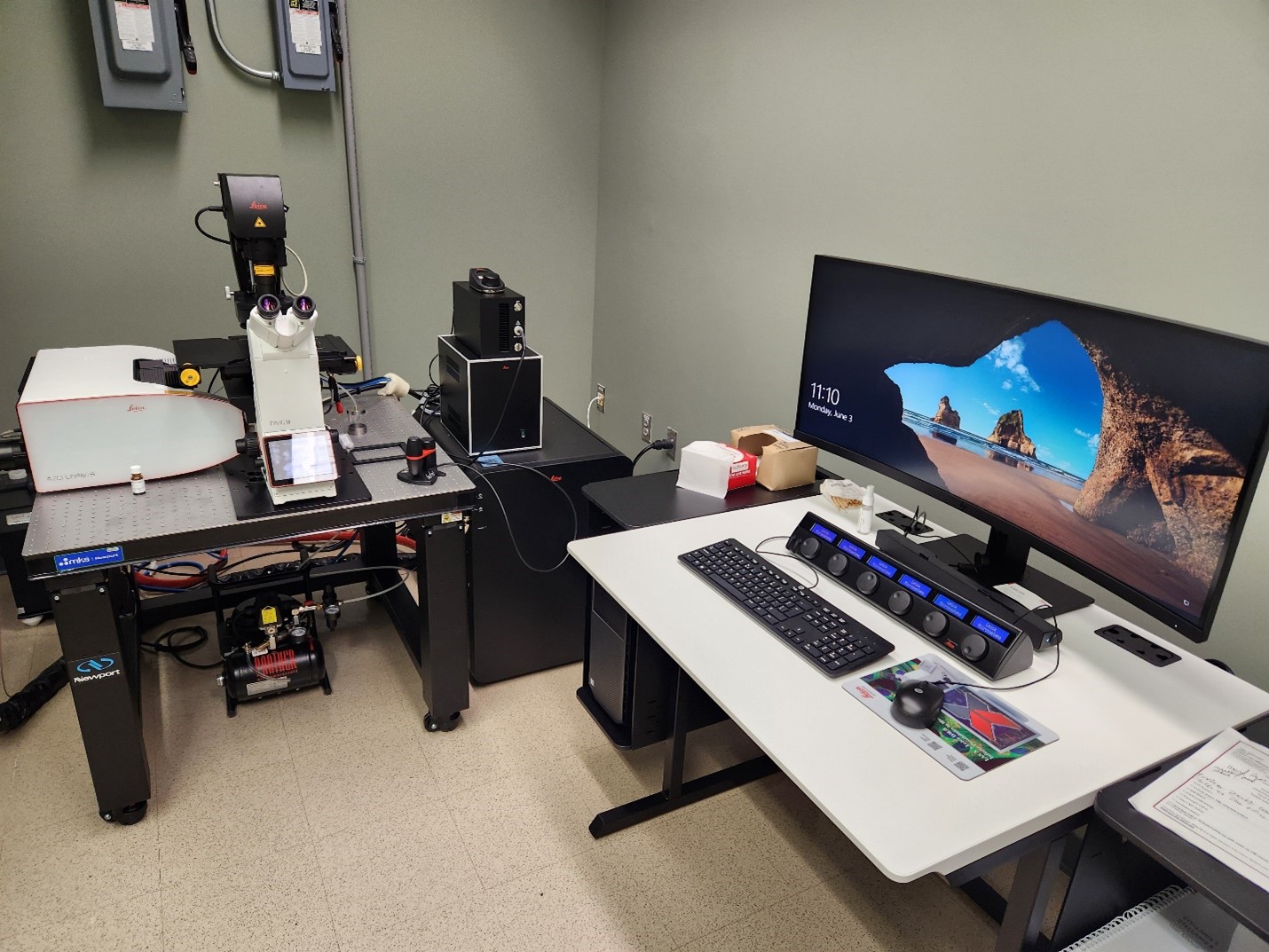
- Four highly sensitive Power HyD® S detectors.
- Acousto Optical Beam Splitter (AOBS®).
- Exclusive White Light Laser that can accommodate any excitation wavelength between 485 nm and 790 nm.
- TauSense® technology allows for extended detection range (up to 850 nm).
- Up to 8 simultaneous excitation wavelengths.
- Imaging spectrally overlapping fluorophores with advanced separation of fluorescent signal.
- Access to functional information (metabolic status, pH, ion concentration).
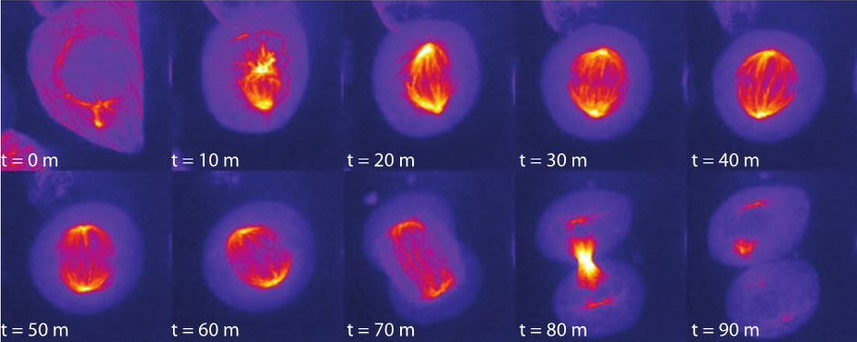
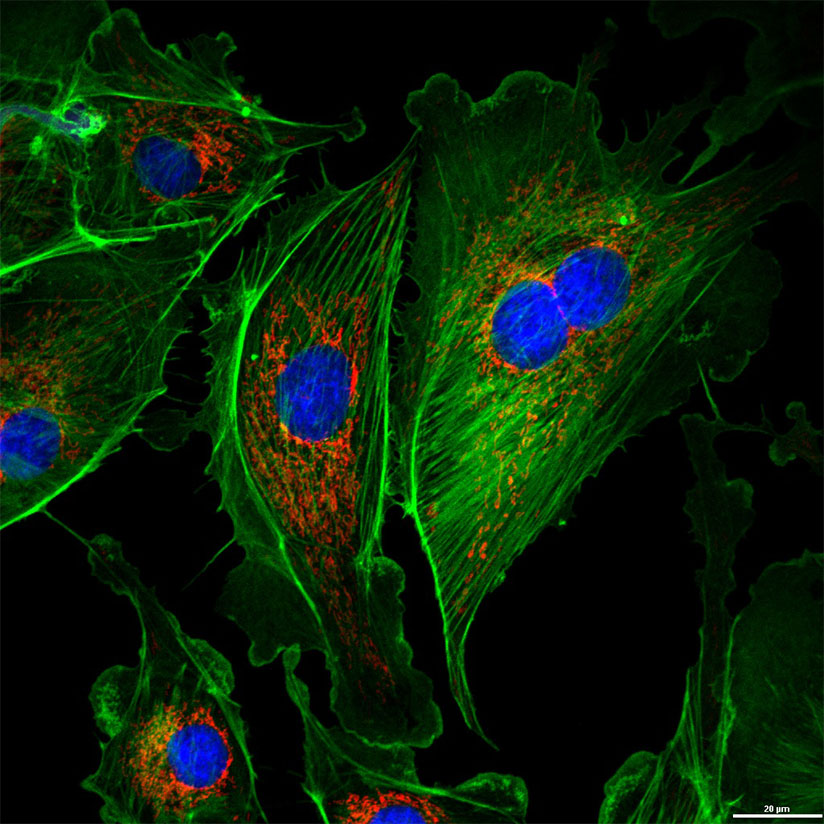
- Super-resolution (down to 120nm) with adaptive LIGHTNING® detection.
- Fluorescent Lifetime Imaging Microscopy (FLIM).
Objectives:
- HC PL APO CS2 63x/1.40 OIL
- HC PL APO CS2 20x/0.75 IMM
- HC PL APO 20x/0.70 DRY
- HC PL APO CS2 10x/0.40 DRY
- HC PL FLUOTAR 5x/0.15 DRY
- HCX PL FLUOTAR,1.6x/0.05 DRY
Accessories:
- Motorized x-y-z stage
- Leica autofocus (only for live or samples in liquid media)